


Industrial Ventilation Requirements for Workshops
Industrial workshop ventilation systems are designed to manage airborne contaminants, maintain airflow movement and improve working conditions within manufacturing and processing environments.
Workshops generating dust, fumes, smoke, heat or airborne particulates require ventilation systems capable of controlling contaminant build up while supporting operational safety and extraction performance.
Ventilation requirements vary depending on the size of the facility, the processes being performed, contaminant type and overall airflow demands throughout the workspace.
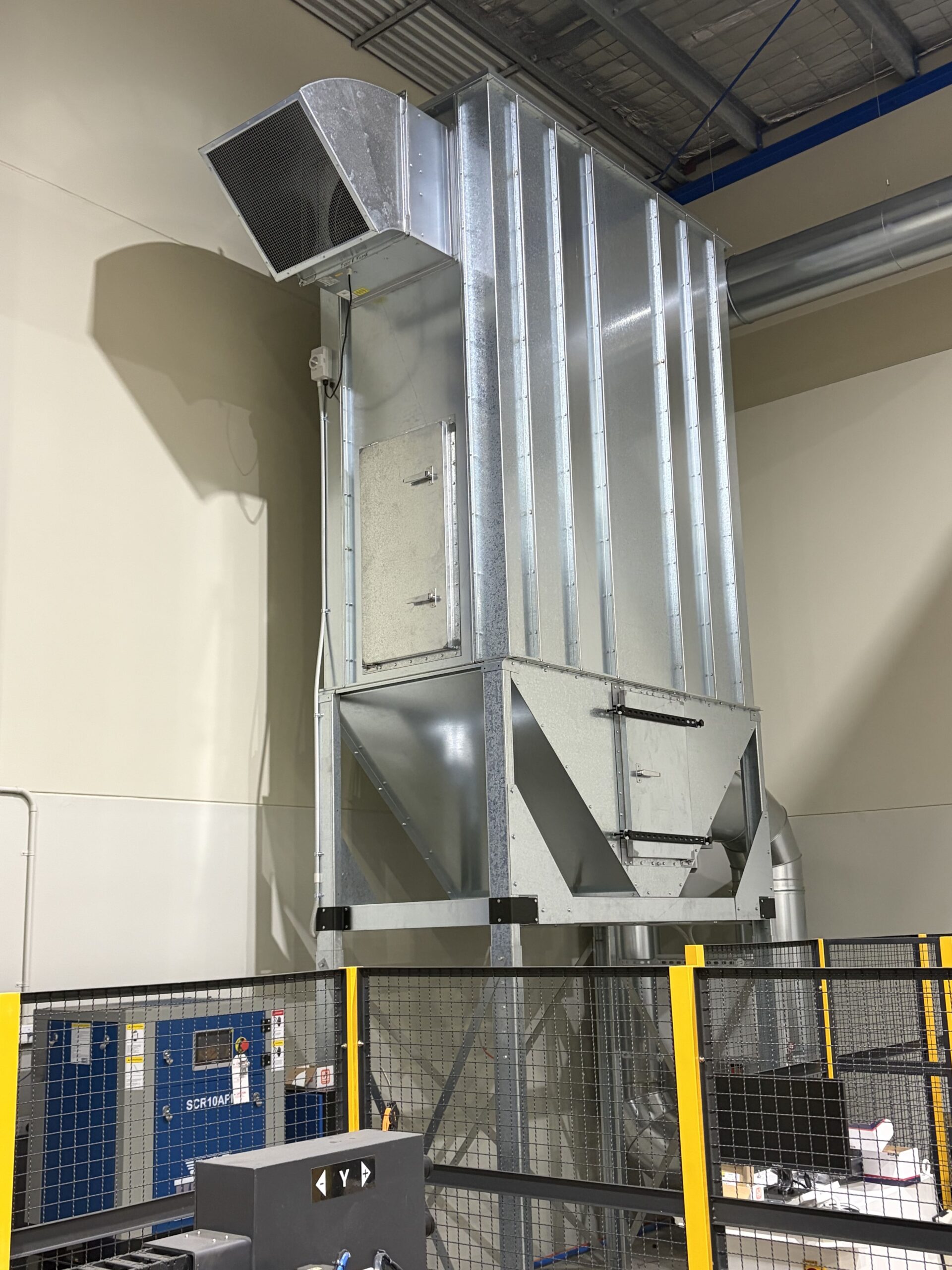
Why Industrial Workshop Ventilation Matters
Poor ventilation can allow airborne contaminants to accumulate throughout operational areas, affecting visibility, air quality and overall workplace conditions.
Industrial ventilation systems help manage:
- airborne dust
- welding fumes
- smoke
- heat build up
- chemical vapours
- airborne particulates generated during production processes
Proper airflow management also assists in maintaining more consistent operating environments across workshops and industrial facilities.
Types of Industrial Workshop Ventilation Systems
Different industrial environments require different ventilation approaches depending on the processes being performed and the contaminants being generated.
Common workshop ventilation systems include:
- local exhaust ventilation systems
- general mechanical ventilation
- dust extraction systems
- fume extraction systems
- make up air systems
- spray booth ventilation systems
Many facilities require a combination of ventilation and extraction infrastructure to effectively manage airborne contaminants across multiple operational areas.
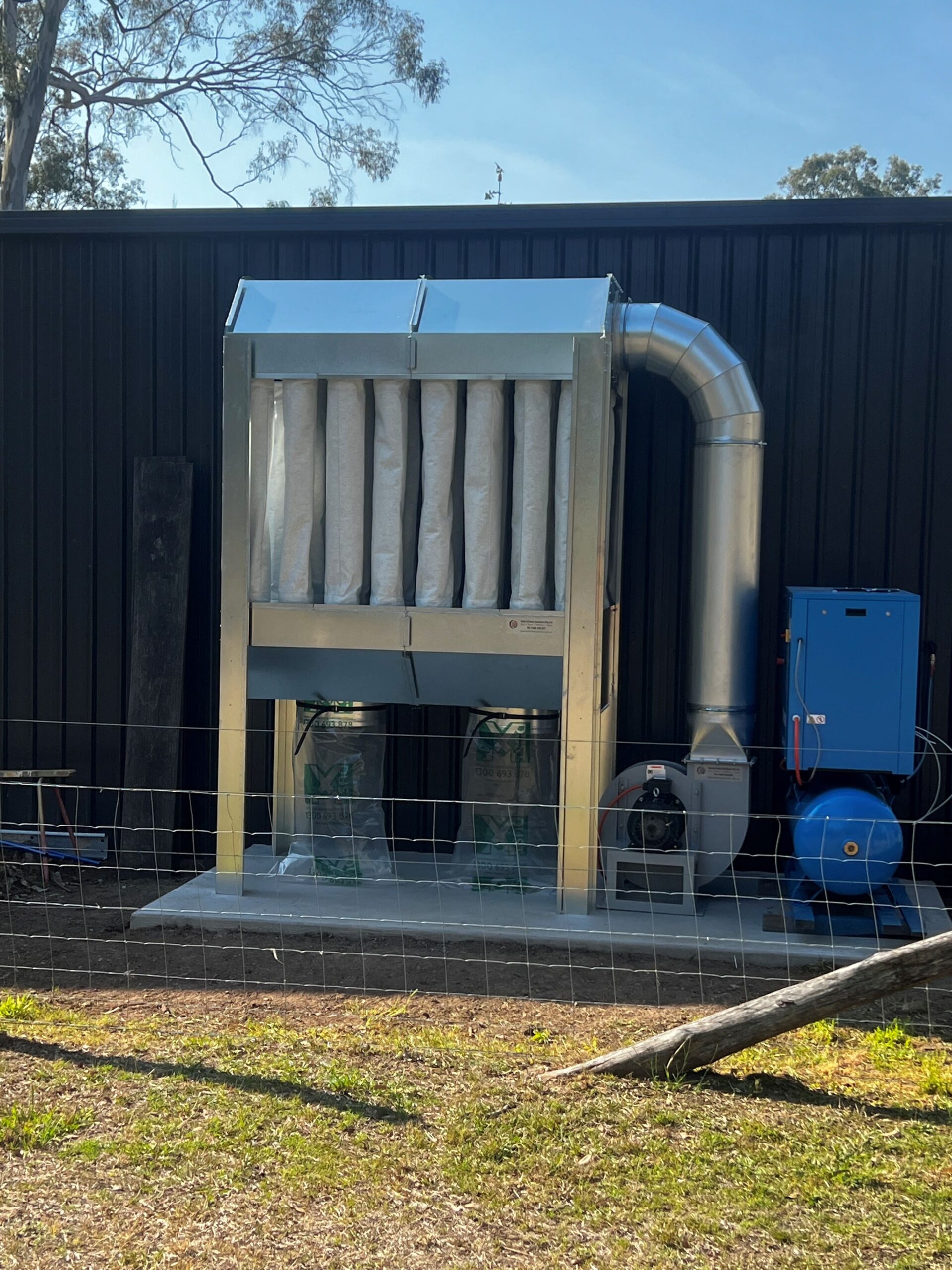
Local Exhaust Ventilation Systems
Local exhaust ventilation (LEV) systems capture airborne contaminants directly at the source before they disperse throughout the workshop.
These systems are commonly used for:
- welding stations
- grinding operations
- fabrication areas
- cutting processes
- dust generating machinery
Effective source capture helps improve extraction efficiency while reducing airborne contaminant spread across the wider facility.
Airflow Requirements & Ventilation Performance
Ventilation systems must maintain sufficient airflow movement to remove airborne contaminants and prevent stagnant air accumulation within enclosed work environments.
Ventilation performance depends on factors including:
- facility size
- ceiling height
- airflow volume
- extraction point placement
- contaminant type
- machinery configuration
- heat generation
Incorrect airflow balancing or undersized ventilation systems may reduce extraction performance and create uneven airflow conditions throughout the workspace.
Dust Extraction & Workshop Ventilation
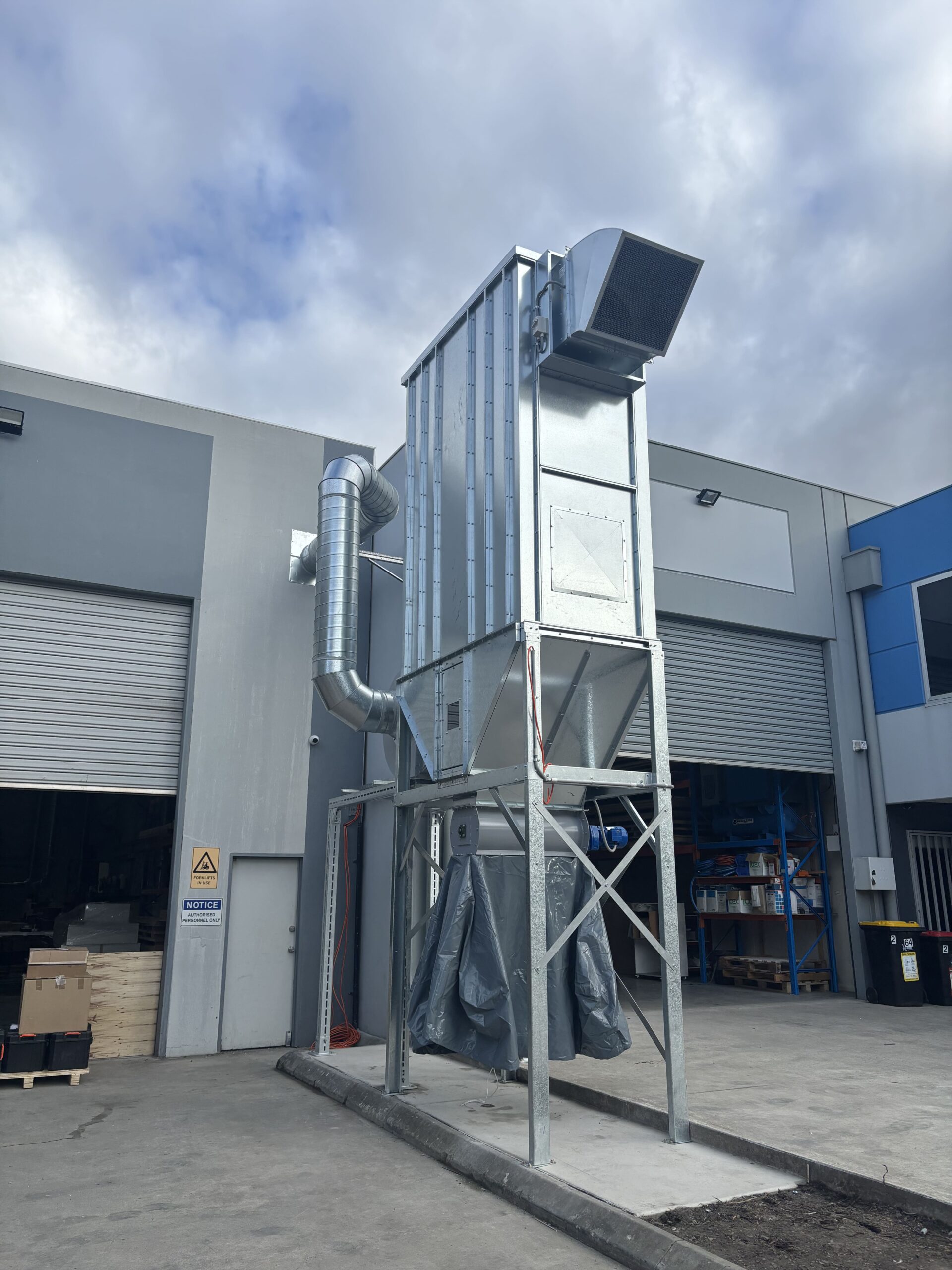
Industrial dust extraction systems often form part of a broader workshop ventilation strategy.
Dust extraction systems are designed to capture airborne particulates generated by machinery and production processes before contaminants spread throughout operational areas.
Industries commonly requiring integrated extraction and ventilation systems include:
- woodworking workshops
- metal fabrication facilities
- manufacturing plants
- grain processing operations
- powder handling environments
MX Dust designs industrial ducting systems suited to industrial fume extraction environments where consistent airflow performance is critical.
Spray Booth & Enclosed Area Ventilation
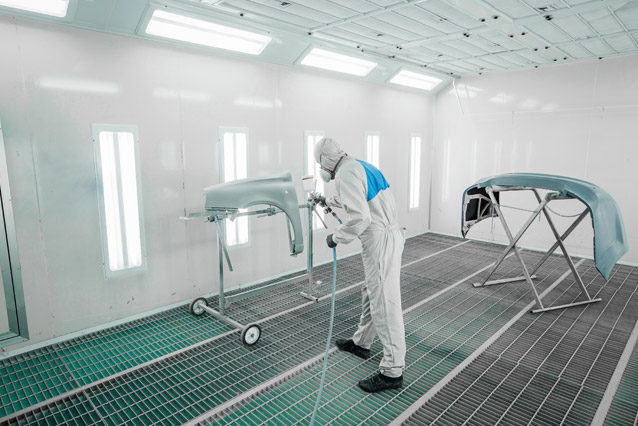
Enclosed operational environments such as spray booths require carefully controlled airflow and ventilation management to maintain extraction performance and contaminant control.
Spray booth ventilation systems are designed to:
- manage overspray
- remove airborne vapours
- maintain airflow consistency
- support filtration performance
- reduce airborne contaminant accumulation
Ventilation design within enclosed areas must consider airflow direction, extraction rates and filtration compatibility.
Workshop Ventilation & Workplace Safety Considerations
Industrial ventilation systems play an important role in helping facilities manage airborne particulate exposure and maintain safer working conditions throughout operational environments.
Ventilation requirements may also involve consideration for:
- airborne contaminant exposure
- combustible dust hazards
- heat stress management
- chemical vapour control
- Safe Work Australia exposure standards
Ventilation system design should align with both operational requirements and workplace safety objectives within the facility.
Ventilation System Design & Ducting Infrastructure
Ventilation system performance depends heavily on correctly designed ducting infrastructure and airflow management throughout the facility.
Factors influencing ventilation efficiency include:
- duct sizing
- duct routing
- extraction point location
- airflow balancing
- filtration integration
- system resistance
Poorly designed ducting layouts can reduce airflow performance and negatively impact contaminant capture efficiency.
Industrial Workshop Ventilation Solutions
Industrial ventilation requirements vary significantly between facilities depending on production processes, facility layout and operational demands.
MX Dust assists Australian workshops and industrial facilities with ventilation and extraction solutions designed around airflow performance, contaminant control and long term operational functionality.